There’s a familiar kind of noise that gathers around Cannes Film Festival every year. Some of it is cinema, some of it is spectacle, and some of it sits somewhere in between.
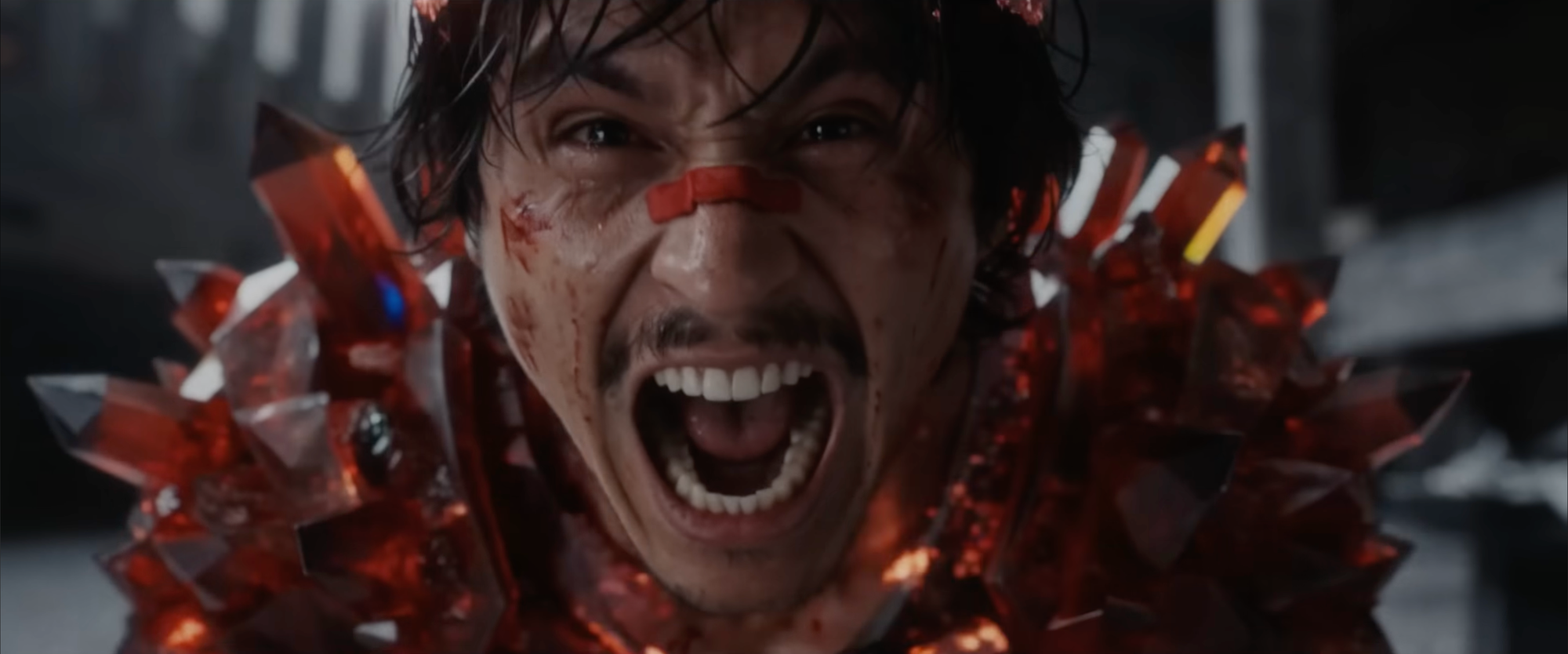
This year, intentionally positioned just outside the orbit of the Cannes, that noise took shape as Hell Grind, widely recognized as the world's first fully AI-generated feature film, presented by Higgsfield Original Series.
The world’s first AI feature film…. The numbers alone are enough to make people pause, if not rethink a few assumptions.
A reported budget of $500,000, with roughly $400,000 spent purely on compute. Fifteen people. Fourteen days from start to finish. More than 61,000 generations pushed through Higgsfield Soul Cinema and Seedance 2.0, with just 960 clips making it into the final cut. Individual prompts stretching to 3,000 words for a single 15-second shot, which starts to feel less like prompting and more like directing in long form.
That part matters. It changes things, but it’s also worth being clear about what this was, and what it wasn’t.
Hell Grind was NOT part of Cannes. It had no connection to the jury, the programme, or the official selection, and under current rules films driven primarily by generative AI don’t come close to the Palme d'Or. It screened nearby, in the same town, catching some of the same attention, but it lived entirely outside the festival itself. Call it a well-timed publicity stunt if you like.
Then there’s the film. It’s horribly uneven. Parts of it look impressive, others fall apart, and the story leans heavily on familiar sci-fi and horror cliches without pushing much further.
And still, there’s something here, because this is how these things begin. Early CGI from Toy Story (1995) onwards looked awkward for years, sometimes distractingly so, yet audiences showed up anyway. They paid to see something new, even when it didn’t fully work. Films like Avatar (*the highest grossing movie of all time) proved that people would accept entire worlds built on machine-assisted systems, layered over performance capture and shaped into something believable enough to carry emotion.
No one seemed too concerned about the tools then. Machine learning has been doing much of the heavy lifting in VFX for over a decade, quietly embedded in workflows that most audiences never think about. The difference now is visibility. Once it’s named, (It’s AI! Shock! Horror!) once it’s front and centre, the reaction shifts. People get triggered and it becomes something to argue with.
So what is Hell Grind? It really isn’t a great film, but it marks a real moment.
It sits closer to The Story of the Kelly Gang than anything screening inside Cannes this week. As the first feature-length film ever made (1906), it wasn’t remembered for its craft or its storytelling, but it mattered because it happened at all. It proved something could be done.
That’s the energy here. Fifteen people, working for two weeks, produced a feature-length film. Flawed, inconsistent, often frustrating, but finished. That information alone massively shifts the baseline. It starts to challenge assumptions about scale, time, and who gets to make a film in the first place.
But it doesn’t happen without highly skilled people. Those 3,000-word prompts tell you that clearly enough. Someone had to think through each moment, shape it, test it, reject most of it, and push again. The machine accelerates the process and expands the possibilities, but it doesn’t replace judgement. Taste still sits at the centre of it.
What has changed is access. Projects that would once have stalled—too expensive, too risky, too difficult to justify—can now be attempted. Not perfectly, not cleanly, but they exist. And once something exists, however messy it looks, it can improve.
Cinema has been here before. When it split from theatre, it was dismissed as mechanical. When sound arrived, it was called a distraction. Digital cameras were criticised for years before they became standard. Some of those concerns were valid, but a lot of it came from the same place: uncertainty about where things were heading.
That feeling is back. AI unsettles the definitions people rely on; performance, authorship, craft; and there isn’t a clear answer yet, which is exactly where the friction lies. Add to that the speed of change, and it’s not surprising people are uneasy.
But let’s look ahead a little. Two years, maybe five, and the tools will feel different. The rough edges will soften. The obvious tells will begin to disappear. The novelty will fade, and attention shifts back to story, where it always ends up. Does it move us emotionally? So why is the platform important? Is comedy any funnier on video or film? It doesn’t matter. It’s about story and the power to move an audience.
The real shift isn’t about replacing filmmakers. It’s about removing the cost barrier that kept so many ideas from ever being made. When filmmakers, those Expert Dreamers who understand character, rhythm, and audience begin to use these tools fully, the results won’t look like Hell Grind. They’ll go way further, and they won’t need large teams to do it.
That’s the part that really matters here. Not the monsters or the spectacle, but the structure underneath. Fifteen people now. Fewer, perhaps, in the near future. Small, highly skilled teams working quickly, building films that once required entire studios.
That’s a genuine shift. An evolution in storytelling.
It won’t dismantle the studio system overnight, but it will start to radically reshape it. It opens space for new voices, new approaches, and new kinds of stories. Yes, there’ll be a lot of slop, and a lot of it will miss the mark. That’s part of the process.
So yes, Hell Grind is horribly flawed and open to mockery. It leans on familiar ideas and doesn’t always land. There are moments where it feels wafer-thin. Haters will hate.
But that’s not really the point.
It shows what can be done right now, with the tools as they are today. And if this is where things begin, the next stage is going to move quickly, faster than many people expect, and faster than some are comfortable with.
As humans, we don’t handle change well. Especially when it threatens to displace so much of which we hold dear and are so used to. The moment things get uncertain or hard to define, the instinct is to resist, to pull back, to question the ground under our feet. And yet this is the same species that keeps pushing forward, building, testing, wandering into the unknown just to see what’s there.
That contradiction never goes away. We’re wired to disrupt our own reality, then hesitate when it shifts. Drawn to the new, yet uneasy when it arrives….